

“Calvin Duncan was 19 in 1982 when the police arrested him for a murder-robbery in New Orleans. The eyewitness testimony at his trial was unreliable, but Duncan’s lawyer offered only a minimal defense, and he was sentenced to life in prison.
“While in prison, Duncan studied law, hoping to appeal his case. In the process he became a jailhouse lawyer — officially as part of the Inmate Counsel Substitute Program at the Louisiana State Penitentiary in Angola.
I did apply for [wrongful conviction compensation, up to $400,000 in Louisiana], but … I didn’t get it. But what I did get when I got released was a $10 check. I still have that $10 check.
 “‘In places like Louisiana, once a conviction is upheld on direct appeal, we’re not entitled to a lawyer,’ Duncan says. ‘[Jailhouse lawyers] actually provide legal assistance to those individuals that cannot afford an attorney.’
“Duncan worked on hundreds of cases while he was in prison. ‘There are guys that committed their crimes. There are guys that didn’t commit their crimes,’ he says. ‘As a jailhouse lawyer, we provided assistance to everybody that we determined that was not afforded a fair trial.’ …
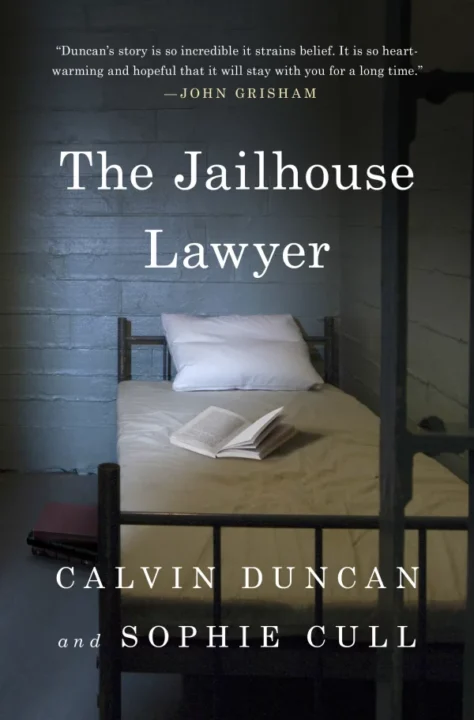
“Duncan’s new memoir, co-authored with Sophie Cull, is called The Jailhouse Lawyer. …
“On whether he got an apology or reparations after spending more than 28 years in prison for a crime he didn’t commit:
“The judge said that she’s sorry for what happened to me, but I didn’t get any reparation. I did apply for it. In Louisiana, they have this wrongful conviction compensation law that allows a person that been wrongfully convicted, innocent, they would give you up to $400,000 and you would get $40,000 a year for a 10-year period. Well, I actually applied for that, but … I didn’t get it. But what I did get when I got released was a $10 check. And I still have that $10 check.”
Listen to Duncan’s full interview with NPR:

