By Pauline Rogers (Leading with Conviction™ 2023):
As America approaches its 250th anniversary, the nation is preparing for celebrations, reflections, and tributes to the founding ideals of liberty and independence. Fireworks will illuminate the sky. Flags will wave proudly across cities and small towns. Speeches will remind us of the courage of those who declared freedom in 1776.
But anniversaries are not just moments to celebrate. They are moments to take inventory.
And if America is honest with itself, one place demands our attention before the fireworks begin: Mississippi State Penitentiary at Parchman.
[Anniversaries] are moments to take inventory. … [And] one place demands our attention … Mississippi State Penitentiary at Parchman.
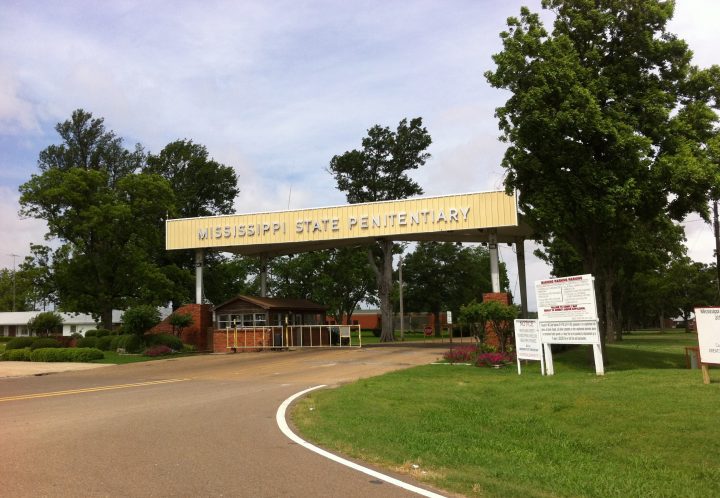 Known simply as Parchman, the prison stands as one of the most infamous correctional institutions in American history. Established in 1901, it was built on the model of a plantation, where incarcerated men, many of them Black, were forced to labor under brutal conditions. Historians and civil rights scholars have long documented how Parchman evolved directly from the legacy of convict leasing and post-Reconstruction racial control.
In fact, investigative reporting by outlets like The Marshall Project and historical research referenced by the Equal Justice Initiative have shown how Southern prison systems often replicated structures of forced labor that followed the abolition of slavery.
Parchman became the physical embodiment of a troubling constitutional loophole: the exception clause in the Thirteenth Amendment to the United States Constitution, which abolished slavery “except as punishment for a crime.”
That exception has shaped generations of incarceration in America.
For over a century, the stories emerging from Parchman have been stories of suffering, resistance, and survival. In recent years, the facility again drew national scrutiny after reports of violence, crumbling infrastructure, and inhumane living conditions. Coverage by Mississippi Today and the U.S. Department of Justice investigations highlighted systemic failures that many Mississippians, especially those with loved ones inside, have known about for decades.
The truth is this: Parchman is not just a prison. It is a mirror.
It reflects the unresolved contradictions in America’s story of freedom.
How can a nation founded on liberty also lead the world in incarceration?
How can we celebrate independence while maintaining systems that permanently exile millions of citizens from full participation in society?
These are not abstract questions for me. They are deeply personal.
How can we celebrate independence while maintaining systems that permanently exile millions of citizens from full participation in society?
For more than three decades, through the work of the RECH Foundation, I have walked alongside men and women returning home from prisons like Parchman. I have seen what incarceration does, not just to individuals, but to families, children, and entire communities.
I have also seen something else: transformation. People who were once defined by their worst mistake become mentors, parents, homeowners, and community leaders. People who were written off by society rediscover their dignity and purpose.
That is why, as America prepares to mark 250 years of independence, we must resist the temptation to turn the anniversary into a comfortable celebration of the past. America 250 must be a pivot, not just a party.
If the first revolution declared freedom from monarchy, the next revolution must address freedom from systems that continue to confine opportunity, dignity, and redemption. This does not mean ignoring the past. It means confronting it honestly.
Parchman should not only be remembered as a site of suffering—it should be a catalyst for change. It should remind us that punishment alone does not produce safety. In fact, societies that rely solely on punishment often perpetuate cycles of harm.
What produces safety is restoration. Restoration means investing in housing, education, mental health, employment, and community stability for those returning home. It means recognizing that justice must include both accountability and the possibility of redemption.
At RECH, we see every day what restoration can look like. Individuals who once slept in prison cells now own homes, run businesses, mentor youth, and contribute to the communities they once left behind.
That is the freedom story America should be writing.
As the nation approaches this historic anniversary, we have a choice. We can celebrate 250 years of independence while ignoring the systems that still cage human potential. Or we can use this moment to expand the promise of liberty.
The next revolution must be restorative. The next 250 years must expand freedom, not prisons.
If America truly believes in liberty and justice for all, then the story of Parchman should not end with incarceration. It should end with transformation. And that is a story worth telling.
Pauline Rogers is a longtime criminal justice reform advocate and founder of the RECH Foundation, which supports formerly incarcerated people reentering society. She is a WKKF Kellogg Foundation CLN Fellow, a Marquis Who’s Who in America, and a JLUSA Leading with Conviction™ 2023 alum.